
Seung-MinJi
[자료 구조] 힙 본문
힙 : 데이터에서 최대값과 최소값을 빠르게 찾기 위해 고안된 완전 이진 트리
완전 이진 트리 : 노드를 삽입할 때 최하단 왼쪽 노드부터 차례대로 삽입하는 트리
힙을 사용하는 이유
- 배열에 데이터를 넣고, 최대값과 최소값을 찾으려면 O(n)이 걸림
- 이에 반해, 힙에 데이터를 넣고, 최대값과 최소값을 찾으면 O(logn)이 걸림
- 우선 순위 큐와 같이 최대값 또는 최소값을 빠르게 찾아야 하는 자료구조 및 알고리즘 구현 등에 활용됨
2. 힙(Heap) 구조
힙은 최대값을 구하기 위한 구조(최대 힙, Max Heap)와 최소값을 구하기 위한 구조(최소 힙, Min Heap)로 분류할 수 잇음
힙은 다음과 같이 두 가지 조건을 가지고 있는 자료 구조임
- 각 노드의 같은 해당 노드의 자식 노드가 가진 값보다 크거나 같다(최대 힙의 경우)
- 최소힙의 경우는 각 노드의 값은 해당 노드의 자식 노드가 가진 값보다 크거나 작음
- 완전 이진 트리 형태를 가짐
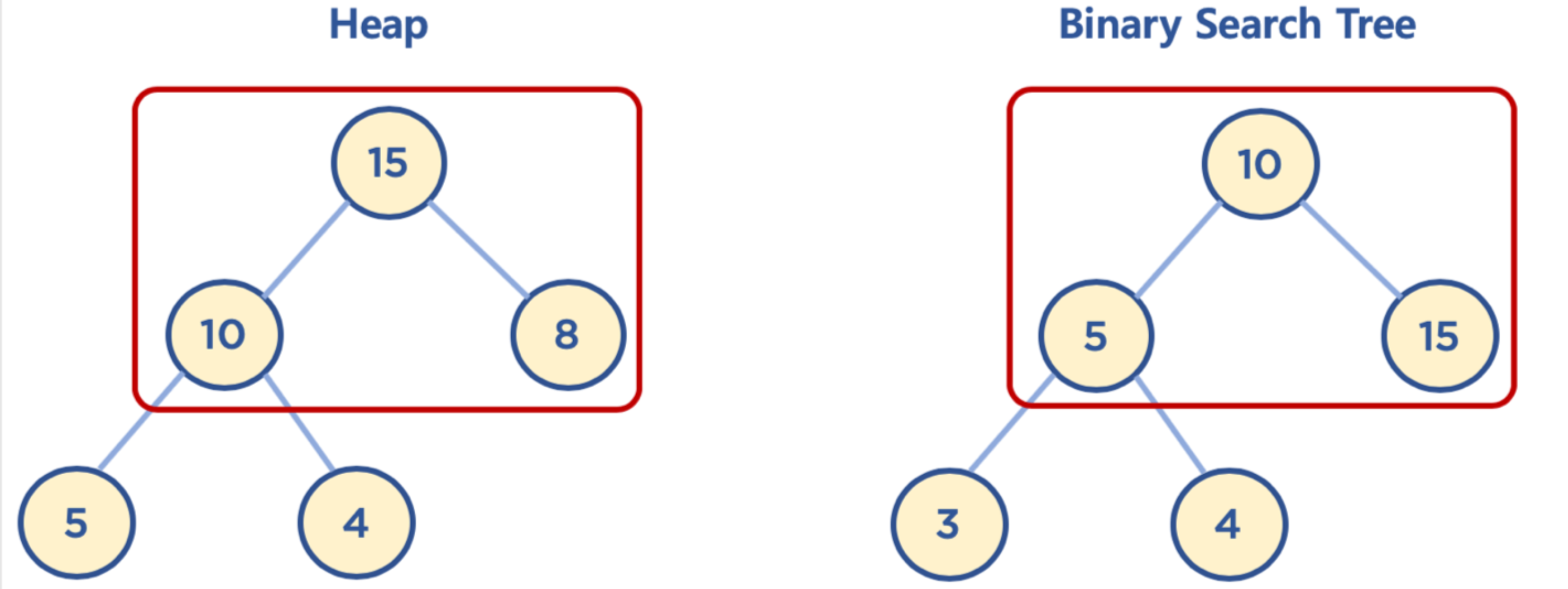
힙과 이진 탐색 트리의 공통점과 차이점
공통점 : 힙과 이진 탐색 트리는 모두 이진 트리임
차이점 :
- 힙은 각 노드의 값이 자식 노드보다 크거나 같은(Max Heap의 경우)
- 이진 탐색 트리는 왼쪽 자식 노드의 값이 가장 작고, 그 다음 부모 노드, 그 다음 오른쪽 자식 노드 값이 가장 큼
- 힙은 이진 탐색 트리의 조건인 자식 노드에서 작은 값은 왼쪽, 큰 값은 오른쪽이라는 조건은 없음
- 힙의 왼쪽 및 오른 쪽 자식 노드의 같은 오른쪽이 클수도 있고 왼쪽이 클수도 있음
- 이진 탐색 트리는 탐색을 위한 구조, 힙은 최대/최소값 검색을 위한 구조 중 하나로 이해하면 됨
3. 힙(Heap) 동작
- 데이터를 힙 구조에 삽입, 삭제하는 과정을 그림을 통해 선명하게 이해하기
힙에 데이터 삽입하기 - 기본 동작

힙에 데이터 삽입하기 - 삽입할 데이터가 힙의 데이터보다 클 경우 (Max Heap의 예)
- 먼저 삽입된 데이터는 완전 이진 트리 구조에 맞추어 최하단부 왼쪽 노드부터 채워짐
- 채워진 노드 위치에서, 부모 노드보다 값이 클 경우, 부모 노드의 위치를 바꿔주는 작업을 반복함(swap)

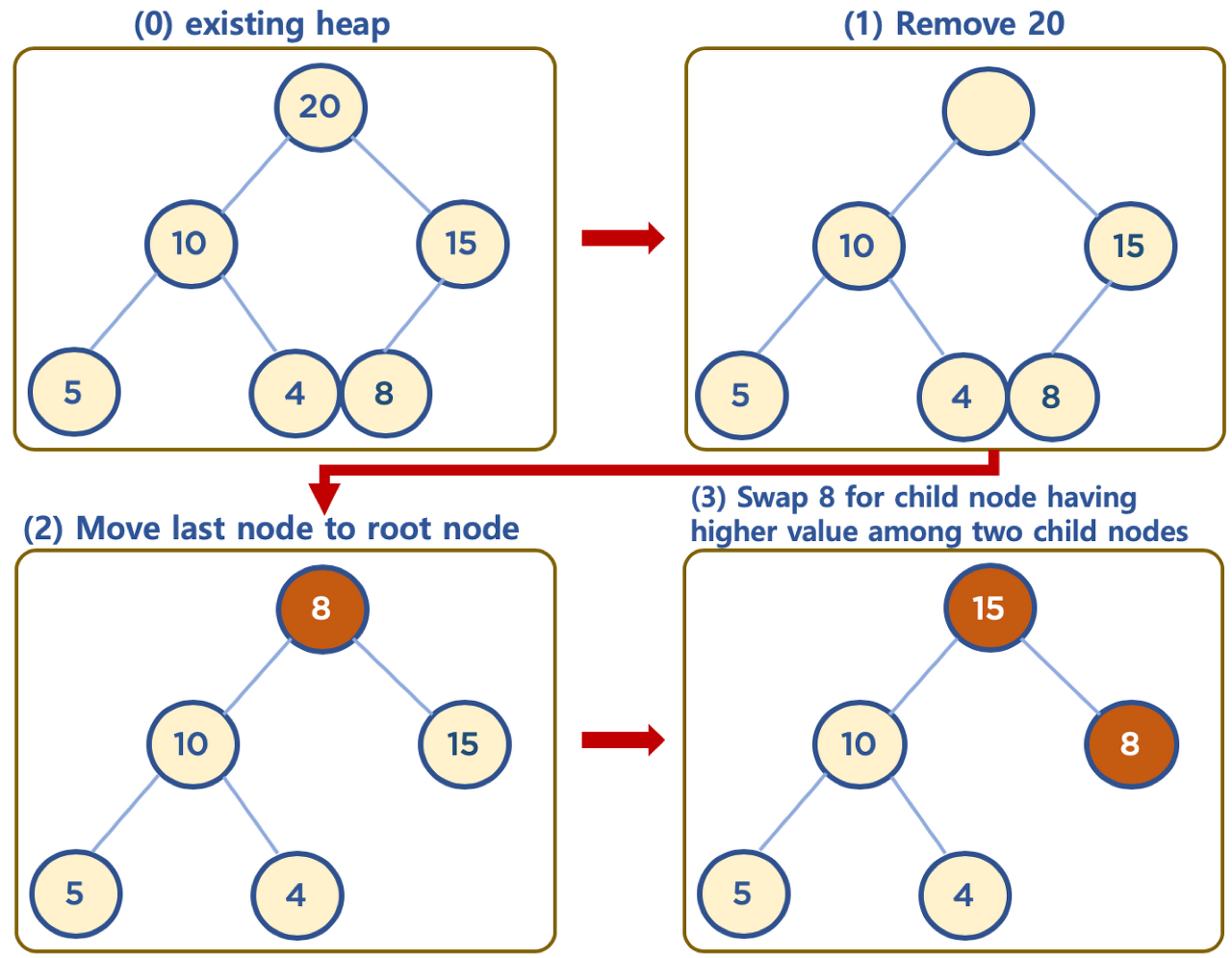
힙에 데이터 삭제하기 (Max Heap의 예)
보통 삭제는 최상단 노드를 삭제하는 것이 일반적임
- 힙의 용도는 최대값 또는 최소값을 root 노드에 놓아서, 최대값과 최소값을 바로 꺼내 쓸 수 있도록 하는 것임
상단의 데이터 삭제시, 가장 최하단부 왼쪽에 위치한 노드(일반적으로 가장 마지막에 추가한 노드)를 root 노드로 이동
root 노드의 값이 child node 보다 작을 경우 root 노드의 child node 중 가장 큰 값을 가진 노드와 root 노드 위치를 바꿔주는 작업을 반복함( swap)
4. 힙 구현
힙과 배열
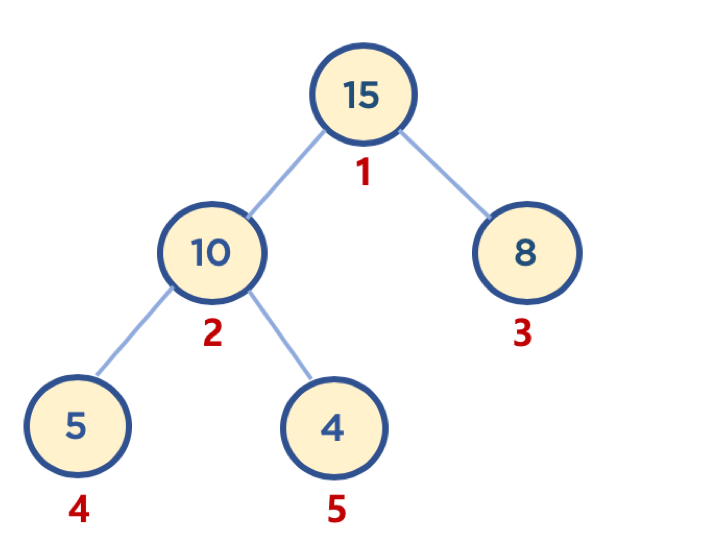
일반적으로 힙 구현시 배열 자료구조를 활용함
배열은 인덱스가 0번부터 시작하지만, 힙 구현의 편의를 위해 root 노드 인덱스 번호를 1로 지정하면 구현이 좀더 수월함
- 부모 노드 인덱스 번호는 = 자식 노드 인덱스 번호 // 2
- 왼쪽 자식 노드 인덱스 번호 = 부모 노드 인덱스 번호 * 2
- 오른쪽 자식 노드 인덱스 번호 = 부모 노드 인덱스 번호 *2 +1
힙에 데이터 삽입 구현 (Max Heap 예)
힙 클래스 구현
class Heap :
    def __init__(self, data):
        self.heap_array = list()
        self.heap_array.append(None)
        self.heap_array.append(data)

    def move_up(self, inserted_idx) :
        if inserted_idx <= 1:
            return False

        parent_idx = inserted_idx // 2
        if self.heap_array[inserted_idx] > self.heap_array[parent_idx] :
            return True
        else :
            return False

    def insert(self, data):
        if len(self.heap_array) == 0 :
          self.heap_array.append(None)
          self.heap_array.append(data)
          return True

        self.heap_array.append(data)

        inserted_idx = len(self.heap_array)-1

        while self.move_up(inserted_idx):
            parent_idx = inserted_idx // 2
            self.heap_array[inserted_idx], self.heap_array[parent_idx] = self.heap_array[parent_idx], self.heap_array[inserted_idx]
            inserted_idx = parent_idx

        return True
힙 삭제 구현
class Heap :
    def __init__(self, data):
        self.heap_array = list()
        self.heap_array.append(None)
        self.heap_array.append(data)

    def move_down(self, poped_idx):
        left_child_poped_idx = poped_idx * 2
        right_child_poped_idx = poped_idx * 2 +1

        # case1 왼쪽 자식 노드가 없을 떄
        if left_child_poped_idx >= len(self.heap_array):
            return False
        # case2 오른쪽 자식 노드만 없을 때
        elif right_child_poped_idx >= len(self.heap_array):
            if self.heap_array[poped_idx] < self.heap_array[left_child_poped_idx] :
                return True
            else :
                return False
        # case3 왼쪽, 오른쪽 자식 노드 모두 있을 떄
        else :
            if self.heap_array[left_child_poped_idx] > self.heap_array[right_child_poped_idx]:
                if self.heap_array[poped_idx] < self.heap_array[left_child_poped_idx]:
                    return True
                else :
                    return False
            else :
                if self.heap_array[poped_idx] < self.heap_array[right_child_poped_idx]:
                    return True
                else :
                    return False

    def pop(self):
        if len(self.heap_array) <= 1:
            return None

        returned_data = self.heap_array[1]
        self.heap_array[1] = self.heap_array[-1]
        del self.heap_array[-1]
        popped_idx = 1

        while self.move_down(popped_idx):
            left_child_popped_idx = popped_idx * 2
            right_child_popped_idx = popped_idx * 2 + 1

            # case2: 오른쪽 자식 노드만 없을 때
            if right_child_popped_idx >= len(self.heap_array):
                if self.heap_array[popped_idx] < self.heap_array[left_child_popped_idx]:
                    self.heap_array[popped_idx], self.heap_array[left_child_popped_idx] = self.heap_array[left_child_popped_idx], self.heap_array[popped_idx]
                    popped_idx = left_child_popped_idx
            # case3: 왼쪽, 오른쪽 자식 노드 모두 있을 때
            else:
                if self.heap_array[left_child_popped_idx] > self.heap_array[right_child_popped_idx]:
                    if self.heap_array[popped_idx] < self.heap_array[left_child_popped_idx]:
                        self.heap_array[popped_idx], self.heap_array[left_child_popped_idx] = self.heap_array[left_child_popped_idx], self.heap_array[popped_idx]
                        popped_idx = left_child_popped_idx
                else:
                    if self.heap_array[popped_idx] < self.heap_array[right_child_popped_idx]:
                        self.heap_array[popped_idx], self.heap_array[right_child_popped_idx] = self.heap_array[right_child_popped_idx], self.heap_array[popped_idx]
                        popped_idx = right_child_popped_idx

        return returned_data

    def move_up(self, inserted_idx):
        if inserted_idx <= 1:
            return False
        parent_idx = inserted_idx // 2
        if self.heap_array[inserted_idx] > self.heap_array[parent_idx] :
            return True
        else :
            return False

    def insert(self, data):
        if len(self.heap_array) == 1:
            self.heap_array.append(data)
            return True

        self.heap_array.append(data)
        inserted_idx = len(self.heap_array) - 1

        while self.move_up(inserted_idx):
            parent_idx = inserted_idx // 2
            self.heap_array[inserted_idx], self.heap_array[parent_idx] = self.heap_array[parent_idx], self.heap_array[inserted_idx]
            inserted_idx = parent_idx
        return True
5. 힙(Heap)의 시간복잡도
depth(트리의 높이)를 h라고 표기한다면, n개의 노드를 가지는 Heap에 데이터 삽입 또는 삭제시, 최악의 경우 root 노드에서 leaf 노드까지 비교해야 하므로 h = log2(n)에 가까우므로 시간 복잡도는 O(log(n))이 된다
- 참고: 빅오 표기법에서 log(n)에서의 log의 밑은 10이 아니라 2
- 한번 실행시마다 50%의 실행할 수도 있는 명령을 제거한다는 의미, 즉 50%의 실행시간을 단축시킬 수 있다는 것을 의미함
'Computer Science' 카테고리의 다른 글
| [알고리즘] 삽입 정렬 (0) | 2023.09.08 |
|---|---|
| [알고리즘] 버블 정렬 (0) | 2023.09.08 |
| [자료 구조] 트리 (0) | 2023.07.27 |
| [자료 구조]해쉬 테이블 (0) | 2023.07.24 |
| [알고리즘] 시간 복잡도 표현 방법 (0) | 2023.07.24 |


